
Lymphatic drainage after liposuction is a gentle massage technique that encourages fluid to move out of swollen tissue. Many plastic surgeons recommend it, and small studies suggest it may ease swelling, firmness, and discomfort, but large, high-quality trials are lacking. It works best as one part of a recovery plan that includes compression, walking, and your surgeon’s instructions. Start only when your surgeon clears you, with a trained therapist.
A week after liposuction, you may look puffier than you did before surgery. Your clothes feel tight, some areas feel firm or lumpy, and every recovery video you watch seems to swear by lymphatic massage. So is lymphatic drainage after liposuction a must, a helpful extra, or mostly hype?
The honest answer sits somewhere in the middle. Lymphatic massage can be a helpful part of recovery for some patients, but it isn’t a requirement for everyone, and it can’t fix an uneven result. This guide explains what it does, what the research shows, and how to decide if it belongs in your plan. It reflects the approach of board-certified plastic surgeon Dr. Siamak Agha in Newport Beach, who tailors aftercare to each patient’s procedure.
Why Swelling Happens After Liposuction
Swelling is a normal part of liposuction recovery. Removing fat disrupts small blood and lymph vessels in the treated area, and the body responds with inflammation and fluid buildup. Most swelling improves over the first few weeks, but some can linger for several months before your final contour appears.
The lymphatic system is a network of thin vessels that carries excess fluid and proteins back toward the bloodstream. After liposuction, these channels need time to reconnect and reroute. Until they do, fluid can collect under the skin, causing puffiness, tightness, and sometimes areas that feel hard. In some patients, prolonged swelling can contribute to fibrosis, a buildup of firm scar tissue beneath the skin.
What Lymphatic Drainage After Liposuction Does
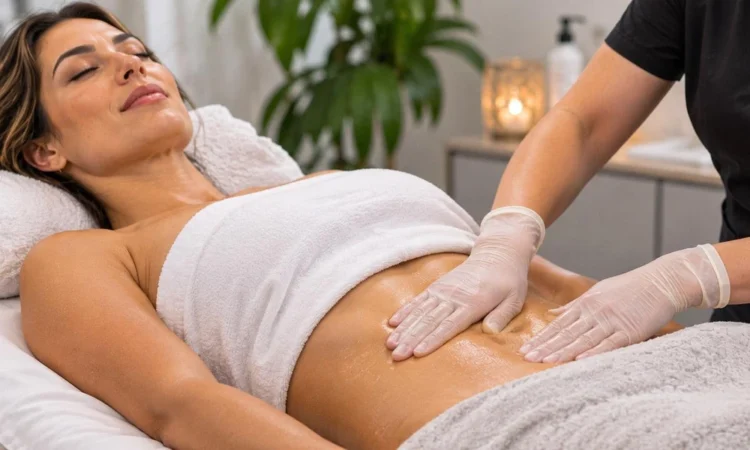
Manual lymphatic drainage uses very light, rhythmic strokes that gently stretch the skin to move fluid toward working lymph nodes. The goal is to help the body clear excess fluid while damaged channels recover. It is not a deep-tissue massage, and the pressure is intentionally light.
Pressing too hard can flatten the delicate vessels near the skin’s surface and irritate tissue that’s still healing. A trained therapist works in a specific sequence, often starting near lymph nodes in the neck, armpits, or groin before moving to the treated areas. Sessions commonly focus on the abdomen, flanks, back, thighs, or arms, depending on where fat was removed.
One surgeon interviewed by the American Society of Plastic Surgeons explained that body contouring procedures like liposuction and tummy tucks shift where the body’s drainage goes, which is part of the rationale for postoperative lymphatic massage.
What the Research Shows
Evidence for lymphatic massage after cosmetic surgery comes mainly from small studies and surgeon experience. Those studies suggest it may reduce swelling, firmness, and pain, but they don’t prove it improves final results. The strongest evidence for the technique is in treating lymphedema, a chronic condition, rather than routine post-surgical swelling.
In one small clinical study published in the Indian Journal of Plastic Surgery, 18 women received twelve sessions of therapeutic ultrasound followed by lymphatic drainage after liposuction or lipoabdominoplasty. The researchers reported reduced swelling and tissue fibrosis, and pain disappeared. With so few patients and no control group, it’s an encouraging signal, not a verdict.
Plastic surgeons differ on how essential it is. Some surgeons quoted by ASPS start lymphatic massage the day after surgery and continue several times a week for about two months, saying it can help prevent fibrosis, contour irregularities, and lumps. Others, like a New York surgeon interviewed by RealSelf, argue that surgical technique has far more impact than any massage or garment afterward.
Lymphatic massage can support a good liposuction result. It can’t create one.
When Lymphatic Massage Helps Most
Lymphatic massage tends to make the most sense when swelling is likely to be significant or slow to resolve. It’s often recommended after larger or multi-area procedures and when early firmness suggests fibrosis may be developing.
Situations where your surgeon may be more likely to recommend it include:
- Large-volume or multi-area liposuction, such as lipo 360, where swelling is widespread.
- Areas prone to stubborn swelling, including the lower abdomen, flanks, and inner thighs.
- Early firmness or lumpy areas that may be developing fibrosis.
- Combined procedures, such as liposuction with a tummy tuck, should only be done when your surgeon specifically includes them in your plan.
For smaller, single-area liposuction, many patients recover well with compression and time alone.
Who Should Wait or Skip Lymphatic Massage
Lymphatic massage isn’t right for everyone. People with an active infection, a known or suspected blood clot, uncontrolled heart failure, or open wounds should avoid it unless a doctor approves. Starting too soon, or with too much pressure, can also irritate healing tissue.
Call your surgeon before booking a session, and right away, if you notice any of these warning signs:
- Calf pain, warmth, or swelling in one leg
- Sudden shortness of breath or chest pain
- Fever or chills
- Spreading redness, warmth, or drainage from an incision
- Swelling that gets dramatically worse instead of better
These can signal complications such as a blood clot, infection, or a fluid collection called a seroma, which need medical attention rather than massage.
How Lymphatic Drainage Fits Into Liposuction Recovery
Lymphatic massage works best as one part of a complete recovery plan. Compression garments, early walking, hydration, and following your surgeon’s activity guidelines do most of the work. If massage is part of your plan, choose a therapist trained in manual lymphatic drainage who regularly works with post-surgical patients.
Compression Comes First
Your compression garment helps control swelling, supports the tissue as it heals, and encourages skin to adapt to your new contour. Wear it exactly as instructed, including how many hours per day and for how many weeks. Lymphatic massage complements compression, but it doesn’t replace it.
Movement and Hydration
Gentle walking soon after surgery helps circulation and lowers the risk of blood clots. Drinking enough water and limiting very salty foods may also help your body manage fluid. Avoid strenuous exercise until your surgeon clears you.
Timing and Number of Sessions
There’s no universal schedule. Some surgeons start lymphatic massage within days of surgery, while others wait a week or more. The number of sessions ranges from a handful to several per week over a couple of months. Your surgeon will base the recommendation on the size of your procedure and how you’re healing.
Other Recovery Support
Some patients ask about additional ways to support healing, such as hyperbaric oxygen therapy for plastic surgery recovery, which the practice offers as an optional adjunct to standard aftercare. Discuss any add-on with your surgeon so it fits your overall plan.
At The One Plastic Surgery Center, Dr. Agha gives each patient specific aftercare instructions as part of their liposuction recovery. Ask during your consultation whether lymphatic massage is included in your plan, when it should start, and how many sessions are typical for your procedure.
Compression, movement, and patience do most of the work. Lymphatic massage is a supporting player.
The Bottom Line on Lymphatic Drainage After Liposuction
Lymphatic drainage after liposuction is a reasonable, low-risk add-on for many patients when a surgeon recommends it and a trained therapist performs it. It may make swelling and firmness easier to manage, especially after larger procedures. Still, the technique your surgeon uses, your compression garment, and time have the biggest influence on your final result.
Ready to find out if liposuction is right for you? Schedule a consultation with board-certified plastic surgeon Dr. Siamak Agha at The One Plastic Surgery Center in Newport Beach to discuss your goals and options.
Frequently Asked Questions
Is lymphatic drainage necessary after liposuction?
Not always. Many surgeons recommend it, especially after larger or multi-area procedures, but research support comes mainly from small studies. It’s best viewed as an optional add-on your surgeon can advise on.
When should I start lymphatic massage after lipo?
Only when your surgeon clears you. Some surgeons start within days of surgery, while others wait a week or more depending on the procedure and how you’re healing.
How many lymphatic drainage sessions do I need?
There’s no standard number. Some surgeons suggest sessions several times a week for a few weeks to two months, while others recommend only a few or none, depending on the size of the procedure.
Can lymphatic massage prevent fibrosis after liposuction?
Small studies and surgeon experience suggest it may help reduce firmness and lumpiness, but there’s no strong proof it prevents fibrosis. Surgical technique, compression, and healing all play a role.
Who should not get lymphatic drainage massage?
People with an active infection, a known or suspected blood clot, uncontrolled heart failure, or open wounds should avoid it unless a doctor approves. Always check with your surgeon first.
Medical disclaimer: This article is for educational purposes only and is not medical advice. Results and candidacy vary by patient, and a consultation with a qualified plastic surgeon is required to determine whether liposuction is right for you and what your recovery plan should include.