
As a physical health and rehabilitation specialist, I spend a significant portion of my professional career analyzing spinal mechanics, treating lumbar strain, and evaluating home-use recovery technologies. Lumbar compression is easily one of the most widespread musculoskeletal challenges I encounter, driven by long hours of desk work, sedentary habits, heavy lifting, and chronic postural stress. When patients or colleagues ask me for at-home recovery solutions that bridge the gap between professional therapy sessions and routine self-care, I am inherently cautious. Over the years, I have tested countless foam rollers, static back stretchers, and basic vibrating cushions, many of which fail to provide genuine structural tension relief. However, when I set out to test the Back Restore lumbar therapy device, I approached it with a rigorous clinical lens to evaluate whether its integrated dynamic traction, heat therapy, and vibration modalities could truly support long-term lumbar health.
Understanding the Triple-Action Therapeutic Technology
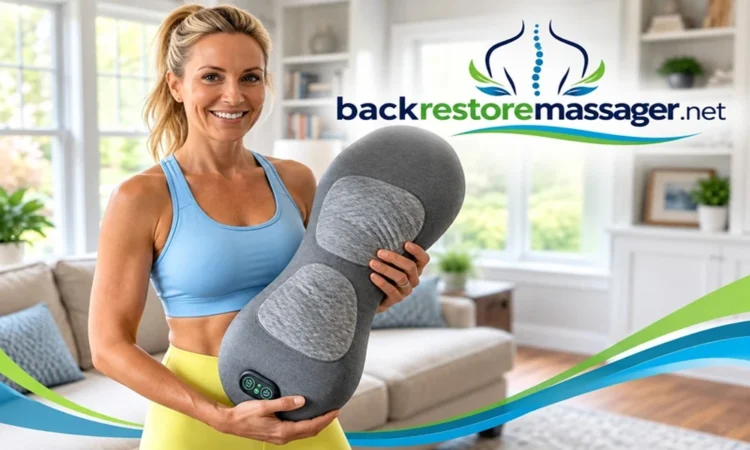
What immediately sets the Back Restore device apart from static cushions or simple massage pads is its dynamic, multi-modal engineering. Rather than relying solely on passive stretching, Back Restore combines motorized decompression traction, deep-penetrating thermal therapy, and high-frequency rhythmic vibration massage into a synchronized, automated session.
From a physical therapy standpoint, true lumbar decompression requires gentle, controlled elevation of the lower spine to expand compressed intervertebral disc spaces. Back Restore achieves this through an internal motorized lift mechanism that rhythmically arches and elongates the lumbar curve. This gentle movement expands restricted disc spaces, encouraging nutrient-rich fluid flow back into compressed discs while easing pressure on sensitive spinal nerve roots. Simultaneously, the cushion supplies continuous, calibrated thermal warmth that penetrates deep into rigid muscle fibers. Heat increases localized blood circulation, enhances soft tissue elasticity, and relaxes stubborn muscle spasms, making the spine far more receptive to decompression. To complete the therapeutic cycle, targeted acoustic vibration massage stimulates local nerve pathways, effectively calming hyperactive nerve signals and dissolving stubborn focal muscle knots along the lower back.
My Hands-On Testing Experience and Daily Routine
To thoroughly evaluate the real-world performance of Back Restore, I integrated it into a daily 15-minute recovery routine following long shifts of patient consultations and desk work. Setting up the device was exceptionally straightforward. I placed the unit on a firm supportive surface-using it on a carpeted floor or yoga mat yielded the optimal alignment-and lay back slowly until my lower spine rested comfortably over the center ergonomic contour of the cushion.
Using the handheld remote controller, I initiated the therapeutic cycle and customized the settings to match my physiological needs. Right from the start, the experience was impressive. As the motorized traction activated, the cushion elevated my lower back into a smooth, controlled arch, creating a distinct feeling of weightlessness across the lumbar vertebrae. The thermal heating element warmed up rapidly, delivering deep, soothing warmth directly to tight lumbar tissues without feeling uncomfortably hot. Combining the motorized lift with the rhythmic acoustic vibration felt remarkably relaxing; the targeted oscillations relaxed the deep paraspinal muscles without any harsh pounding or superficial buzzing. Throughout the 15-minute session, the unit guided my spine through gentle lift-and-release cycles, giving the lumbar region time to adapt naturally to the gentle lengthening motion.
Therapeutic Benefits and Clinical Observations
After testing Back Restore consistently over several weeks, the therapeutic benefits became clearly evident. Immediately after finishing each 15-minute session, I felt a noticeable lightness in my lower back, as though hours of gravitational compression had been erased. The nagging stiffness that typically accumulates after prolonged sitting was drastically reduced, allowing for smoother hips and improved forward bending flexibility.
From an expert perspective, one of the device’s greatest strengths is how effectively it coaxes hypertonic spinal muscles to release while restoring the natural inward lordotic curve of the lumbar spine. Static back arches can sometimes feel uncomfortable for acute back stiffness, but because Back Restore combines soothing deep heat and vibration with motorized movement, the surrounding soft tissues relax willingly. Furthermore, the dynamic traction provides gentle relief to tension radiating toward the glutes and hips, making it an excellent supportive tool for anyone managing everyday spinal fatigue, muscle tightness, or postural strain.
Final Verdict: Is Back Restore Worth Buying?
Finding a reliable, effective, and safe at-home spinal wellness tool can be difficult given the overwhelming number of products available today. Having tested the device extensively and analyzed its underlying physiological mechanisms, I can confidently confirm that Back Restore is worth buying. It successfully translates key physical therapy principles-dynamic decompression, thermal relaxation, and neuromuscular stimulation-into a compact, user-friendly home device. Whether you are dealing with daily lower back tightness from desk work, recovering from intense physical activity, or looking for a drug-free way to maintain spinal health without constant clinical fees, Back Restore offers exceptional therapeutic value and genuine physical relief.
Where to Buy Back Restore
If you want a genuine home back therapy massager, complete your transaction at the official website of Back Restore. Placing an order on the authorized web portal guarantees full warranty protection, original hardware, and secure payment processing. Don’t take chances with unverified sellers when you can order directly from the main store.