

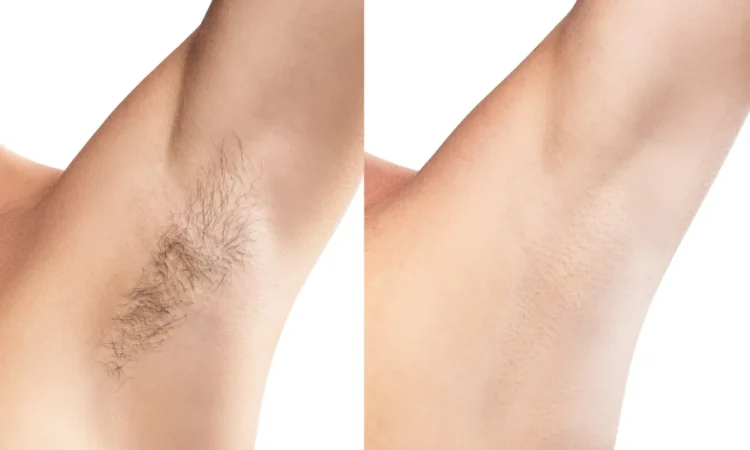
If you are tired of shaving, waxing, or plucking every few days, permanent hair removal probably sounds appealing. But the word “permanent” can be confusing. It does not always mean that every single hair disappears forever. In many cases, it means achieving a long-term reduction in hair growth, with any hair that returns becoming finer, lighter, or less noticeable.
Understanding what different treatments can realistically do makes it easier to choose an option that suits your needs.
What Does Permanent Hair Removal Actually Mean?
When people hear “permanent,” they often imagine never seeing another hair in the treated area. Hair removal treatments are a little more complicated than that.
The U.S. Food and Drug Administration has used “permanent hair reduction” to describe a long-term, stable reduction in the number of hairs that grow back after a course of treatment. In other words, permanent reduction does not necessarily mean removing 100% of the hair forever.
Some people may experience very little regrowth for months or years. Others may notice new hairs appearing over time and choose occasional maintenance treatments. The American Academy of Dermatology also notes that results can vary based on factors such as hair thickness, hair colour, skin colour, treatment area, and the technology used.
Why Does Hair Grow Back?
Hair Grows in Different Stages
One reason permanent hair removal takes time is that your hairs are not all growing at the same moment.
Hair follicles go through different stages of a growth cycle. Light-based treatments work best when the hair is actively growing and still connected to the follicle.
Since only some hairs are in this stage during each treatment, multiple sessions are usually needed. A later session can target hairs that were previously resting or transitioning between growth stages.
Hormones Can Affect Regrowth
Hormonal changes can also influence hair growth.
Pregnancy, menopause, ageing, and some medical or hormonal conditions may cause new or thicker hairs to appear. This means someone who has had good results from hair removal treatments may still notice some new growth years later.
Certain areas, particularly the face, can also be more affected by hormones. The American Academy of Dermatology notes that laser results on a woman’s face may not be permanent for this reason.
Which Hair Removal Methods Last the Longest?
Shaving
Shaving only cuts hair at skin level. It does not affect the follicle underneath the skin.
It is quick, inexpensive, and convenient, but the results are temporary. Hair may become visible again within a few days.
Waxing and Plucking
Waxing and plucking remove hair from the root, so the results generally last longer than shaving.
However, the follicle remains capable of producing another hair. These methods therefore need to be repeated regularly.
Laser Hair Removal
Laser treatments use concentrated light that is absorbed by pigment in the hair. The energy damages the follicle and can reduce its ability to grow hair.
A series of sessions is normally required. According to the American Academy of Dermatology, many people remain hair-free for months or even years after treatment, although some regrowth can occur and maintenance treatments may be needed.
IPL Hair Removal
Intense Pulsed Light, or IPL, also uses light energy to target pigment in the hair, but it is not technically a laser. IPL produces a broader range of light wavelengths instead of the concentrated beam associated with laser devices.
With repeated sessions, it can provide long-lasting hair reduction by targeting hairs during active growth.
Japan IPL Express, for example, offers ADLight™ hair removal treatments with a no-package and no-appointment approach, according to its published service information.
What Affects Permanent Hair Removal Results?
No two people will respond to hair removal treatments in exactly the same way.
Your results may be influenced by:
- Hair colour: Light-based treatments generally target pigment, so darker hair often responds more readily than very light, grey, or white hair.
- Hair thickness: Coarser hairs may respond differently from very fine hairs.
- Treatment area: Hormonal areas may experience more regrowth.
- Skin tone: The device and treatment settings need to be appropriate for the person’s skin.
- Treatment schedule: Missing sessions may make it harder to target hairs at the right point in their growth cycle.
- Hormonal changes: New hair growth can develop even after earlier hairs have been successfully treated.
The experience and technique of the person carrying out a light-based treatment also matter. Incorrect settings can increase the risk of burns, skin-colour changes, or other unwanted effects.
How Many Sessions Will You Need?
There is no universal number that works for everyone.
Laser hair removal commonly requires a series of treatments rather than one visit. The American Academy of Dermatology states that many patients need multiple sessions, often spaced several weeks apart.
IPL treatments are also normally carried out as a series because each session can only target suitable hairs at that point in their growth cycle.
Consistency matters more than expecting instant results.
Should You Expect Zero Hair Forever?
Probably not.
A better way to think about permanent hair removal is as a major, lasting reduction in unwanted hair rather than a guarantee that every follicle will remain inactive for the rest of your life.
Successful treatment may mean:
If you are exploring permanent hair reduction, having realistic expectations is important. Ask what technology is being used, how many sessions may be required, what results are realistic for your hair and skin type, and whether maintenance treatments could be needed later.
“Permanent” does not necessarily mean completely hair-free forever. For many people, the practical goal is simpler: noticeably less hair and much less time spent managing it.