
Clinical clearance for in-clinic whitening depends on gum health, enamel condition, and existing restorations rather than shade preference alone. Patients with active disease require treatment before whitening proceeds. Every top article on professional whitening confirms that patient selection determines outcome reliability more than agent concentration alone. Gum tissue is assessed first since active periodontal disease creates pathways for whitening agents to reach sensitive dentinal tissue, producing persistent post-procedure sensitivity. Enamel thinning, erosion patterns, and micro-cracks identified through radiographic review increase peroxide reactivity beyond what structurally intact teeth generate under the same treatment conditions. Patients carrying composite restorations on visible anterior teeth are assessed carefully since whitening acts only on natural tooth structure, leaving existing restorations unchanged while surrounding teeth lighten. Medical history covering photosensitivity medications and peroxide allergies completes the clearance assessment before any session proceeds.
What conditions disqualify candidates?
Certain clinical presentations make in-clinic whitening inappropriate until underlying conditions receive treatment. Disqualifying factors are identified during pre-whitening examination rather than assumed from patient-reported history alone.
- Active tooth decay on any tooth disqualifies a patient from whitening until cavities are restored, since peroxide agents entering decayed surfaces cause acute sensitivity and accelerate structural breakdown in compromised enamel.
- Exposed root surfaces from gum recession carry no enamel layer, making those surfaces highly reactive to peroxide contact without producing any corresponding shade improvement.
- Cracked tooth syndrome or visible enamel fracture lines allow whitening agents to penetrate toward the pulp, producing sensitivity responses disproportionate to what intact tooth structure would generate.
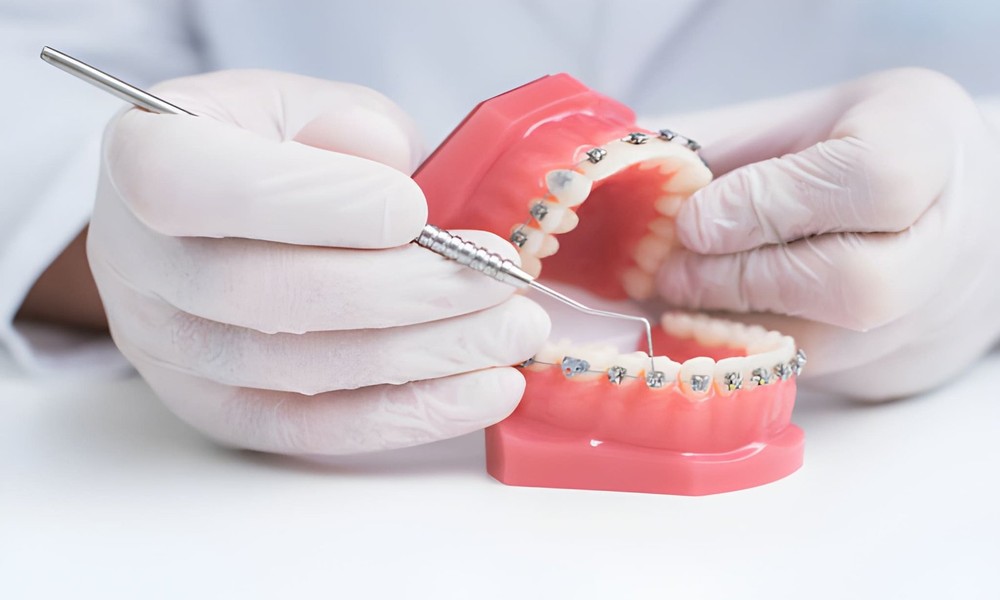
- Patients undergoing orthodontic treatment with fixed appliances cannot receive whitening since the agent contact blocked under the brackets produces uneven shade results visible after bracket removal.
- Known peroxide sensitivity or documented allergic reactions from prior whitening episodes represent absolute contraindications regardless of how mild the reaction history appears in patient records.
Partial qualification cases
Some patients fall into a partial qualification category where whitening is appropriate after specific preparatory treatment is completed. These cases require a defined clinical pathway before sessions begin rather than outright deferral. Patients with gingivitis, rather than established periodontal disease, proceed with whitening after professional cleaning and confirmed tissue healing. Teeth with small composite restorations on posterior surfaces rather than visible anterior teeth can proceed when the shade discrepancy after treatment falls outside the visible smile zone. Patients with mild enamel erosion are assessed individually based on erosion severity, with whitening deferred until dietary adjustment reduces ongoing acid contact with tooth surfaces before treatment begins.
Age and whitening eligibility
Age carries specific clinical weight in whitening eligibility decisions. Younger patients present developmental considerations affecting both clearance decisions and agent selection for in-clinic procedures. Patients under sixteen are generally deferred from professional whitening because pulp chambers remain large relative to tooth dimensions, making teeth considerably more reactive to peroxide agents than adult teeth. Between sixteen and eighteen, eligibility depends on individual development confirmed radiographically rather than chronological age applied as a fixed threshold. Adult patients above eighteen without active disease, structural concerns, or contraindicated medications present the most straightforward eligibility profile, with agent concentration and session duration calibrated to individual sensitivity levels identified during pre-treatment examination.