
As a data analyst, my daily life revolves around metrics, statistical models, and measurable trends. I like numbers because they do not lie. Unfortunately, for years, my personal sleep metrics were telling a grim story. According to my smartwatch and sleep tracking apps, my night-time rest was plagued by low deep-sleep percentages, frequent subconscious awakenings, and average snoring noise spikes exceeding 65 decibels. My chronic snoring wasn’t just disrupting my partner’s sleep-it was leaving me with persistent daytime brain fog, low energy, and a desperate reliance on multiple cups of coffee just to survive afternoon meetings. I had tried everything from disposable nasal strips to intrusive mouthguards that left my jaw aching every morning. When I first came across the SleepEase Pro, an under-chin smart wearable designed to curb snoring through micro-stimulation, my analytical brain was intrigued but cautious. I decided to run a structured, 30-day trial to see if the device could actually deliver quantifiable improvements.
Discovering SleepEase Pro and the Science Behind It
What sets SleepEase Pro apart from traditional anti-snoring contraptions is its intelligent, non-invasive design. Most snoring occurs when the throat tissues over-relax during deep sleep, narrowing the upper airway and causing vibrating turbulence as air passes through. Instead of forcing your jaw forward with a rigid dental guard or pushing pressurized air into your face like a bulky CPAP machine, SleepEase Pro targets the problem at its biological root. It sits discreetly underneath your jawline, anchored by a lightweight, conductive hydrogel patch.
The device operates using advanced acoustic bio-sensing and Electrical Muscle Stimulation (EMS) technology. Built-in precision sensors monitor breathing acoustics in real time. The moment snoring vibrations start, the device responds with whisper-quiet, calibrated micro-pulses. These subtle electrical impulses stimulate the submental muscles under the chin, prompting them to contract slightly and reopen the airway. The process happens subconsciously, maintaining smooth airflow without pulling you out of your natural sleep cycle. As someone who appreciates cause-and-effect systems, this active biofeedback mechanism made immediate sense to me.
Unboxing, Setup, and Wearability
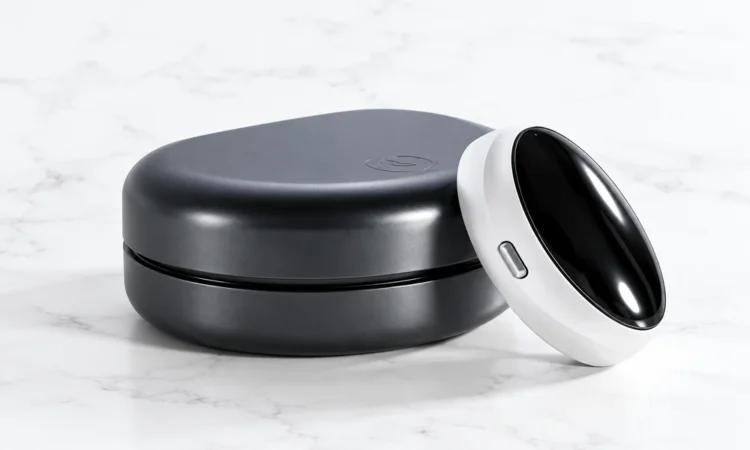
When the SleepEase Pro arrived, I was impressed by its sleek, minimalistic design. The kit came with the core compact unit, reusable conductive hydrogel patches, a USB charging cable, and a clear user manual. Charging the device took less than an hour, making it exceptionally travel-friendly compared to traditional sleep accessories.
The application routine is remarkably straightforward. Before going to bed, I cleansed and thoroughly dried the skin underneath my chin to ensure proper adhesive contact. After snapping the core unit onto a fresh hydrogel patch, I peeled off the protective film and centered the patch firmly under my jawline. The device features simple power controls and customizable intensity settings. I decided to start on the lowest setting for the first few nights to let my body adjust. Once applied, the device feels virtually feather-light. Within five minutes, I practically forgot it was there. Even as a restless sleeper who frequently shifts between side and stomach sleeping, the patch remained securely locked in place without tugging on my skin or restricting movement.
The Data: Analyzing My 30-Day Test Results
To evaluate the performance of SleepEase Pro, I logged nightly data across several key parameters: snoring duration, decibel levels, deep sleep percentage, and subjective morning alertness scores. The quantitative shift was apparent almost immediately.
Week 1: Initial Baseline Shift
On night one, my sleep app recorded a dramatic 60% reduction in overall snore duration. During the first couple of nights, I noticed a very faint, gentle tickling sensation when the micro-pulses engaged, but it was far too mild to wake me up. My mean decibel levels dropped from 68 dB down to under 40 dB. More importantly, my partner reported a noticeably quieter bedroom from night one.
Week 2 to 4: Muscle Toning and Sleep Optimization
By the second week, my metrics stabilized at an impressive standard. My deep sleep duration increased by an average of 45 minutes per night, while nighttime awakenings plummeted. Because SleepEase Pro continuously conditions and tones the upper airway tissues over time, my natural breathing became steady and silent throughout the night. The morning brain fog that had hindered my analytical focus for years was gone. I began waking up feeling genuinely energized, alert, and ready for work without needing an immediate dose of caffeine.
Final Verdict
Testing the SleepEase Pro proved to be one of the best personal health experiments I have ever conducted. As a data analyst who measures success through tangible results, the numbers speak for themselves: quieter nights, longer deep sleep cycles, and vastly improved daytime energy. It completely eliminates the need for uncomfortable mouthpieces, nose clips, or cumbersome machinery. If you or your partner are struggling with disruptive snoring and want a comfortable, tech-forward solution that actually works, SleepEase Pro is worth buying.
Where to Buy SleepEase Pro
Consumers seeking reliable snoring aid technology should make their purchase through the official store of SleepEase Pro. Direct ordering guarantees that you receive genuine EMS components, official product manuals, and secure order fulfillment directly to your address.