VSD Surgery Cost in India: When a Hole in the Heart Needs Closing and What It Costs

A ventricular septal defect (VSD) is a hole in the wall between the heart’s two lower chambers. It is the most common congenital heart defect, and many small holes close on their own in early childhood. When the hole is large, causes symptoms or starts to damage the heart or lungs, it needs to be closed, and parents, or adults diagnosed late, face a practical question: what will treatment cost?
VSD in children and adults
In babies and young children, a large VSD allows extra blood to flow from the left ventricle into the right, flooding the lungs. Signs include fast breathing, sweating during feeds, poor weight gain and frequent chest infections. A moderate hole may cause fewer symptoms but still enlarge the heart over time.
In adults, a VSD may have been missed in childhood if small and only picked up as a murmur. It can also appear after a heart attack (an acquired VSD), which is a medical emergency. Untreated large defects risk pulmonary hypertension, a rise in lung artery pressure that can eventually make closure impossible.
When does a VSD need closure?
The decision depends on size, location, the amount of shunted blood and its effect on the heart. Broadly, closure is advised when:
- The defect is large or causes heart failure symptoms that medicines do not control
- An infant is failing to grow despite feeding support and medicines
- The left side of the heart is enlarged on echocardiography
- Lung artery pressure is rising but still reversible
- There is a history of endocarditis (infection on the valve or defect)
- The hole lies close to the aortic valve and is causing it to leak
Small, restrictive VSDs with a normal-sized heart are often simply monitored. The what size VSD requires surgery article on the Heart Valve Experts site explains how cardiologists weigh these measurements.
Surgical closure vs device closure
Open surgery
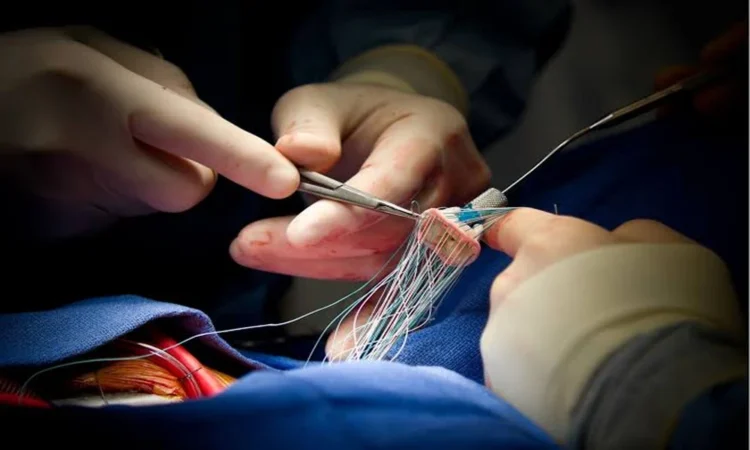
The traditional approach is open heart surgery with a heart-lung machine. The surgeon closes the hole with a patch, usually through the breastbone. It suits all VSD types and sizes, including large holes and those close to valves, and is the standard for infants. Hospital stay is typically five to eight days, with two to three in the paediatric or cardiac ICU.
Transcatheter device closure
For certain VSDs, mainly muscular defects and some perimembranous ones with a safe rim of tissue away from the valves, a catheter can deliver a closure device through a vein, avoiding a chest incision. Patients go home in one to two days. Not every hole is suitable, and the device adds a significant consumable cost. Both routes are described on the Heart Valve Experts VSD closure surgery page, and the general device closure overview covers ASD, VSD and PDA procedures together.
What affects the cost
- Approach: surgery involves theatre time, a perfusionist and a longer ICU stay; device closure has a shorter stay but an expensive implant (imported devices cost more than Indian-made ones).
- Age and weight of the patient: neonatal and infant surgery needs specialised paediatric cardiac ICU care and is costlier.
- Complexity: multiple holes, associated defects (ASD, PDA, pulmonary stenosis) or a VSD after a heart attack increase cost.
- City and hospital tier: paediatric cardiac surgery is concentrated in a limited number of centres, mostly in metros.
- Room category and length of stay.
- Pre-procedure tests: echocardiogram, sometimes cardiac catheterisation to measure lung pressures, blood tests, chest X-ray.
Indicative ranges
As an approximate guide, the vsd surgery cost in india at private hospitals is commonly quoted in the region of roughly ₹2.5-5 lakh for surgical patch closure. Transcatheter device closure, where suitable, is often quoted in a similar or somewhat higher band, because the device price offsets the shorter stay. Complex or redo cases cost more.
These figures are indicative only. They vary by city, hospital, the child’s age and weight, device choice and complications. Government hospitals and charitable paediatric cardiac centres charge far less or operate under scheme rates. The exact amount must come from your treating paediatric cardiologist or cardiac surgeon in writing.
Insurance and scheme support
- Health insurance usually covers VSD closure as an inpatient procedure. For children born with the defect, check whether the policy excludes congenital conditions; many newer policies cover “internal congenital” conditions after a waiting period.
- Ayushman Bharat PM-JAY covers paediatric cardiac surgery including VSD closure at empanelled hospitals.
- Rashtriya Bal Swasthya Karyakram (RBSK) screens children in government schools and anganwadis and refers them for free treatment of congenital heart disease at tied-up hospitals.
- State schemes (for example, in Maharashtra, Karnataka, Tamil Nadu and Telangana) and several hospital trusts offer subsidised or free congenital heart surgery.
- Employer group policies often waive the congenital exclusion; ask HR.
After the procedure
Most children recover fully and lead normal lives. Follow-up includes an echocardiogram at discharge, at three to six months and then yearly for a period. After device closure, aspirin is usually given for about six months, and antibiotic prophylaxis before dental work for six months. Budget for a few follow-up visits and tests in the first year.
When to seek urgent care
In a baby: breathing very fast, turning blue or grey, refusing feeds, or sweating heavily while feeding. In an adult: sudden breathlessness or a new loud murmur after a heart attack. These need an emergency department immediately.
Summary
A VSD needs closing when its size and effects, not just its presence, threaten the heart or lungs. Surgery and device closure are both well-established, and the vsd surgery cost in india is within reach of many families once insurance or scheme coverage is confirmed. Ask for a written, itemised estimate and clarify which approach is being recommended and why.
Disclaimer: This article is for general information only and is not a substitute for medical advice. Please consult a qualified paediatric cardiologist or cardiac surgeon about VSD treatment and an exact cost estimate.